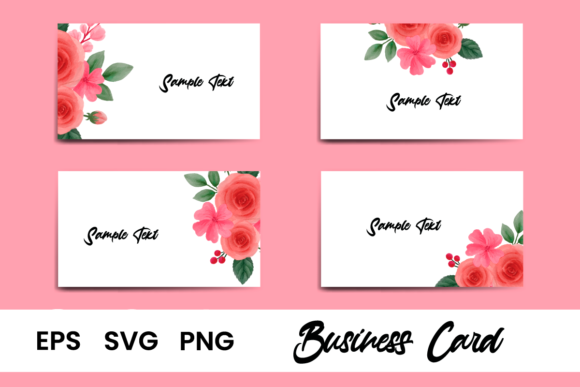
Business Card Template Beautiful Flower
A Watercolor Frame That Wants to Be Embroidered—But Not Everywhere
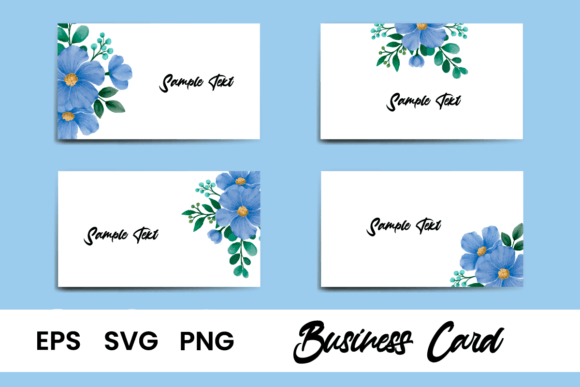
First impression? Soft. Romantic. Quietly confident. Business Card Template Beautiful Flower arrives as a watercolor floral frame—delicate petals, loose brushstrokes, gentle gradients—and immediately suggests elegance over energy. It’s not bold typography or sharp geometry; it’s a whisper of botanical charm, designed for moments that feel personal, handmade, and intentional. As someone who’s stitched hundreds of client projects—from boutique aprons to baby onesies—I don’t just ask “Does it look pretty?” I ask: Where will this hold up under needle and thread? And more importantly: What kind of finished product does it actually elevate?
Real-Life Test: A Linen Tote Bag for a Local Florist
Last week, I used Business Card Template Beautiful Flower as the centerpiece for a custom embroidered linen tote—meant for a small-town florist launching her first holiday pop-up. I resized it to fit a 4” x 6” hoop, placed it slightly off-center on the front panel, and paired it with subtle monogram initials in fine satin stitch below. The result? Warm, cohesive, and unmistakably handcrafted. Customers paused at the booth—not because it screamed “look at me,” but because it felt like something you’d want to touch, keep, and gift. That’s the quiet power of this design: it supports storytelling, not shouting.
Where It Shines (and Where It Steps Back)
Business Card Template Beautiful Flower works best when the embroidery isn’t fighting for attention—it’s supporting a mood, a brand voice, or a tactile experience. Think:
- Embroidered pillow covers for nurseries or guest rooms—its soft edges soften against textured linen or cotton duck.
- Aprons and tea towels for artisan bakeries or herbal apothecaries—where floral motifs reinforce craft authenticity.
- Baby onesies and burp cloths (with careful scaling)—the watercolor looseness reads as gentle, not fussy.
- Custom patches for small shop staff or craft fair vendors—especially when fused onto twill or denim.
- Holiday gift tags or personalized sachets—where a single, elegant motif adds heirloom weight to modest items.
It’s less ideal for high-contrast applications—like dense blackwork on dark sweatshirts—or anywhere legibility or structural clarity is non-negotiable. If your tote bag has heavy canvas texture or your cap has a curved crown, this design’s delicate outer blooms may blur or distort unless you adjust density and stabilizer strategy.
Stitching Realities You Can’t Skip
This isn’t a machine embroidery design out of the box—it’s a graphics file: PNG + editable version. That means you’ll need to digitize it yourself or work with a digitizer before stitching. Don’t assume the watercolor softness translates directly to thread. Here’s what I check every time:
- Test on scrap fabric first—especially if using lightweight cotton, jersey, or terry cloth. Watercolor gradients often demand strategic fill stitch transitions, not just flat fills.
- Review stitch density. Too dense, and the floral frame turns stiff and plasticky. Too sparse, and petals vanish into fabric weave.
- Confirm hoop size compatibility. The original layout fits standard business card proportions—but resizing for apparel or home goods changes tension dynamics.
- Inspect corners and inner negative space. Those delicate vine curls? They’re beautiful in print—but can fray or pucker if stitched too tightly on stretchy fabric.
- Try black-and-white mockups. Does the shape read clearly without color? If not, simplify before digitizing.
- Compare light vs. dark backgrounds. Watercolor relies on luminosity—so test thread contrast carefully on navy, charcoal, or oatmeal fabrics.
Design Integrity Meets Commercial Sense
As an Etsy seller and embroidery educator, I pay close attention to how a template like Business Card Template Beautiful Flower affects perceived value. When stitched well, it elevates a simple kitchen towel from utilitarian to giftable. When rushed or poorly stabilized? It reads as amateurish—even if the concept is lovely. That gap between intention and execution is where many craft businesses lose trust.
Customers don’t buy “a floral frame.” They buy confidence—in your taste, your craftsmanship, your ability to translate feeling into fiber. Business Card Template Beautiful Flower delivers that *if* you honor its nature: it’s not a logo replacement or a branding anchor. It’s a finishing accent. A signature flourish. A quiet nod to care.
That makes it especially strong for creative entrepreneurs building cohesive product lines—think matching embroidered tea towels + sachets + gift tags—all sharing the same floral rhythm. It also works well as part of a larger suite of Print Templates, especially when you’re creating printable mockups for client presentations or digital product previews on your website or socials.
Final Notes for Embroidery Designers & Small Shop Owners
Before you add Business Card Template Beautiful Flower to your next project:
- Use proper stabilizer—cutaway for knits, tear-away for stable wovens, and consider topping for highly textured surfaces.
- Verify licensing for commercial use—especially if selling finished embroidered products or reselling digitized versions. Since it’s labeled as a Graphics file, confirm whether redistribution or derivative creation is permitted.
- Pair thoughtfully—this design doesn’t mix well with heavy script fonts or geometric borders. Let it breathe. Let it be the only floral element on the item.
- Think beyond the card. Yes, it’s named for business cards—but its real strength lives in handmade product contexts where warmth, tactility, and intention matter more than scale.
Business Card Template Beautiful Flower won’t solve every embroidery challenge. But in the right hands—and on the right fabric—it becomes more than decoration. It becomes a quiet signature. A moment of pause. A reason someone chooses your handmade product over mass-produced noise. And in today’s market? That’s not just design sense. It’s business sense.