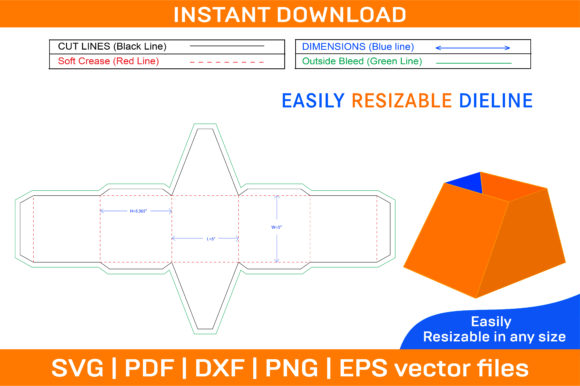
Business Card Box Dieline Template and Graphics
First Impression: Clean, Crafted, Confident
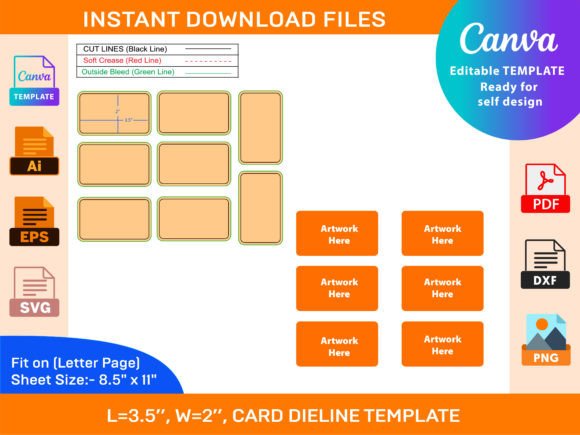
Opening the Business Card Box Dieline Template and feels like unboxing a well-considered tool—not flashy, but deeply intentional. The immediate mood is one of quiet professionalism: precise lines, balanced proportions, and structural clarity. It doesn’t scream; it invites. For brand owners launching a new product or refreshing their visual language, this dieline evokes trust before a single word is read. It leans into premium tactile sensibility—ideal for lifestyle brands, online coaches, handmade product sellers, and creative entrepreneurs who want packaging to feel considered, not generic. It’s equally at home in seasonal campaigns (think holiday gift sets or limited-edition launches) and evergreen content kits, offering warmth without sacrificing polish.
Where It Strengthens Brand Identity—Not Just Decoration
This isn’t clipart masquerading as strategy. As a graphic design asset, the Business Card Box Dieline Template and functions as a foundational element in packaging design and branded physical touchpoints. When paired with your logo design and color system, it elevates product labels, inserts, and unboxing experiences—critical for small business branding where every detail shapes audience trust. In digital contexts, it anchors social media graphics: use the 3D box design as a hero visual for Instagram posts announcing a new course bundle, or layer the foldable box outline over Pinterest pins to showcase printable promotions. Its clean geometry supports visual hierarchy in email banners and blog graphics—guiding attention toward your offer while reinforcing consistency across web design, digital ads, and editorial layouts.
A Workhorse for Content Marketing & Campaign Visuals
In real-world marketing workflows, this asset shines when versatility meets intention. Imagine building a content kit for a digital product launch: the SVG and AI files let you scale the paper box cleanly for Canva templates, while the PNG version drops seamlessly into Facebook ads or website headers. Need a branded lead magnet? Use the folding box as a decorative frame around a downloadable checklist. For event promotions or podcast merch, the dieline becomes a subtle accent in media kits and poster designs—not the star, but the steady rhythm beneath stronger elements. It performs especially well in editorial design and visual storytelling where texture and structure add depth without clutter. And because it’s delivered as a design bundle—including PDF, EPS, DXF, and SVG—the same asset adapts across print templates, laser-cut merchandise, and web-based mockups.
Where It Builds Recognition—and Where It Needs Guardrails
The Business Card Box Dieline Template and excels in high-impact, low-text scenarios: campaign headers, product launch visuals, packaging accents, and branded template covers. Its folded geometry creates natural focal points, making it ideal for Pinterest pins, Instagram carousels, and promotional banners that need to stand out in crowded feeds. But it’s not universally flexible. Avoid using it in formal corporate branding where rigid minimalism dominates—or in dense information layouts where its lines compete with data. On mobile screens, test readability: the fold lines can blur if scaled too small. Steer clear on low-contrast backgrounds (e.g., light grey on white), and reconsider placement if your brand voice relies heavily on handwritten fonts or ultra-minimalist aesthetics—this asset carries quiet authority, not whimsy.
Practical Brand Designer Notes You’ll Actually Use
Before dropping it into client work or paid campaigns, run these checks:
- Test it with your full brand color palette—does the dieline hold up in both primary and secondary hues, especially in dark mode or print?
- Check black-and-white usage: Does the folding box retain clarity as a line art element on monochrome stickers or embroidery mockups?
- Place it inside real campaign mockups, not just isolated previews—see how it behaves next to your logo, headline font, and CTA buttons.
- Preview on mobile screens at 50% size: Are fold lines still legible? Does spacing feel generous or cramped?
- Compare against competitor visuals: Does it help your brand feel distinct—or accidentally echo someone else’s packaging system?
- Pair it with your full font stack: How does it sit beside serif headlines, sans-serif body copy, script accents, and display fonts? Does it anchor or distract?
- Review spacing and balance—especially if nesting text or icons inside the box shape. Overcrowding kills its elegance.
- Confirm commercial licensing: This is a commercial design asset, but always verify usage rights for client projects, digital product visuals, and paid ad placements.
Why Creative Entrepreneurs Keep Coming Back to This Asset
At its core, the Business Card Box Dieline Template and solves a quiet but persistent problem: how to make tangible, memorable impressions without overdesigning. It bridges the gap between print templates and modern design—it’s not retro, not futuristic, but timelessly functional. Whether you’re a blogger building a content bundle, a social media manager prepping seasonal assets, or a product creator designing packaging inserts, this graphic design asset delivers professional branding without demanding advanced technical skill. Its inclusion of SVG, PNG, AI, and DXF files means it lives comfortably in Illustrator, Canva, Cricut Design Space, and Figma alike. And because it’s rooted in real-world production (paper box, folding box, printable box template), it avoids the “digital-only” trap—supporting both digital ads and physical unboxing moments that deepen emotional connection.
The Bottom Line for Marketers and Designers
If your goal is stronger first impressions, clearer visual hierarchy, and more consistent branding across channels—from email banners to product labels to editorial layouts—the Business Card Box Dieline Template and earns its place in your design assets library. It’s not a shortcut. It’s a thoughtful multiplier: one clean, adaptable foundation that helps your message land with precision, warmth, and quiet confidence. For creative marketplace buyers, small business owners, and content creators building visual systems—not just one-off graphics—this is the kind of printable design that pays dividends across campaigns, seasons, and growth stages.