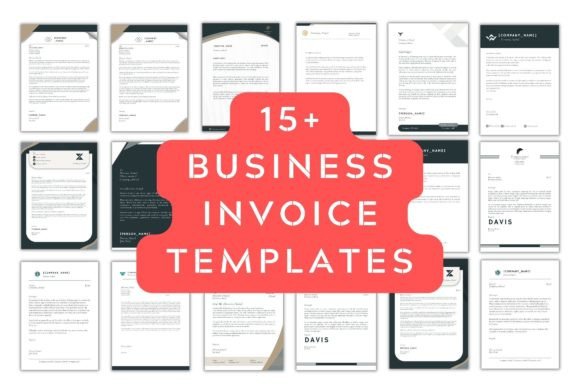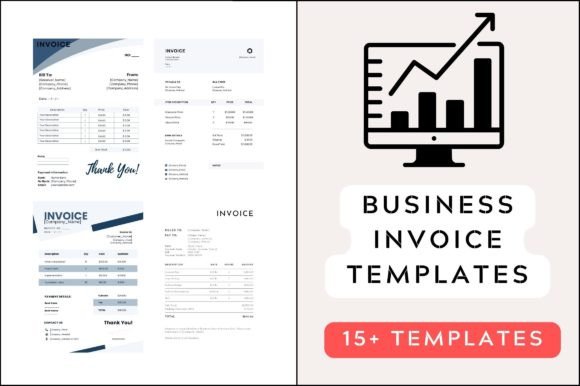
15 Business Invoice Templates
A Designer’s First Look: Clean, Functional, and Surprisingly Versatile
As someone who’s stitched thousands of designs—from delicate baby onesies to bold boutique tote bags—I opened 15 Business Invoice Templates expecting a utilitarian set. What I found was more thoughtful than I anticipated: a cohesive, minimalist collection built around clarity, balance, and quiet professionalism. These aren’t ornamental flourishes or decorative monograms—they’re print templates designed for legibility and purpose. That said, their clean lines, consistent spacing, and restrained typography translate surprisingly well into embroidery when adapted intentionally.
Real-World Fit: When “Invoice” Becomes a Handmade Statement
Last week, I used one variation from 15 Business Invoice Templates as the centerpiece for a custom embroidered apron—part of a small-batch launch for a local artisanal bakery. The owner wanted something subtle but unmistakably “their own”: no logo, no slogan—just clean, hand-stitched billing details on the pocket. We scaled down a simplified invoice header, removed extraneous fields, and stitched it in soft ecru thread on oat-colored linen. Customers loved it—not as paperwork, but as proof of care. That’s where 15 Business Invoice Templates shines: not as literal invoices, but as elegant, trustworthy design assets that lend authenticity to handmade products.
How It Performs Across Embroidery Projects
15 Business Invoice Templates works best when treated as a starting point—not a final stitch file. Its strength lies in structure, not ornamentation. On sweatshirts and tote bags, simplified versions hold up beautifully with medium-density fill stitch and crisp satin borders. For baby embroidery or nursery decor, choose lighter-weight layouts with open spacing; dense columns or tiny subtotals won’t resolve cleanly at small scale. As a patch design? Yes—but only if you simplify headers and remove fine grid lines. As a tea towel or pillow cover motif? Absolutely—especially when paired with a single-line running stitch border for rhythm and contrast.
Where it stumbles is in high-detail execution. Tiny numerals, narrow column dividers, or tight alignment grids don’t survive stitch conversion without careful editing. On stretchy fabric like knits or curved surfaces like caps, avoid any version with tightly packed text blocks—those will distort or lose legibility. And on dark fabric? Always test thread color contrast first: light gray or charcoal fills often read better than stark white, especially in satin stitch.
What It Adds (and Doesn’t Add) to Your Finished Product
This isn’t a “wow” design—it’s a “yes, this feels right” design. It elevates professionalism without shouting. A customer receiving a personalized gift with a stitched invoice header on the packaging tag doesn’t see bureaucracy; they see intention, consistency, and attention to detail. That builds trust—especially for Etsy sellers and craft fair vendors who rely on perceived value and brand cohesion. It also strengthens handmade presentation: unlike generic clipart, 15 Business Invoice Templates carries the quiet confidence of real-world utility.
That said, it won’t replace a custom monogram or playful applique design. It doesn’t sparkle. It doesn’t tell a story through imagery. Its value is functional elegance—ideal for boutique branding, commercial embroidery jobs for small service providers, or printable mockups that need authentic-looking financial context.
Smart Embroidery Designer Notes Before You Stitch
- Always test 15 Business Invoice Templates on scrap fabric first—especially if adapting it for machine embroidery. Print Templates don’t auto-translate to stitch files.
- Review stitch density carefully. High-density fill areas may pucker thin fabric or overwhelm lightweight stabilizer.
- Confirm hoop size compatibility. Some layouts assume wide-format space—scale thoughtfully for 4x4 or 5x7 hoops.
- Inspect small details: decimal points, dashes, and colons often vanish in satin or fill stitch. Simplify or omit.
- Test black-and-white mockups. If it reads clearly in grayscale, it’ll likely stitch cleanly.
- Compare performance on light vs. dark fabric backgrounds—thread color choice changes everything.
- Use appropriate stabilizer: cutaway for knits, tear-away for stable wovens, and mesh for lightweight linens.
- Verify licensing before selling finished items or digital embroidery files derived from 15 Business Invoice Templates. Not all Graphics bundles permit commercial redistribution or derivative embroidery files.
Final Thought: Less Is More—When It’s Done Right
I’ve passed over dozens of “business-themed” embroidery files because they leaned too hard into clipart clichés—briefcases, dollar signs, or cartoon calculators. 15 Business Invoice Templates avoids that trap entirely. Its restraint is its strength. Used with intention—as part of a custom embroidered tote bag, a stitched kitchen towel for a wedding gift, or a subtle patch for a maker’s studio apron—it quietly signals craftsmanship, clarity, and credibility. It’s not flashy. It’s functional. And in the world of handmade goods, that kind of quiet confidence is rare—and deeply valuable.